


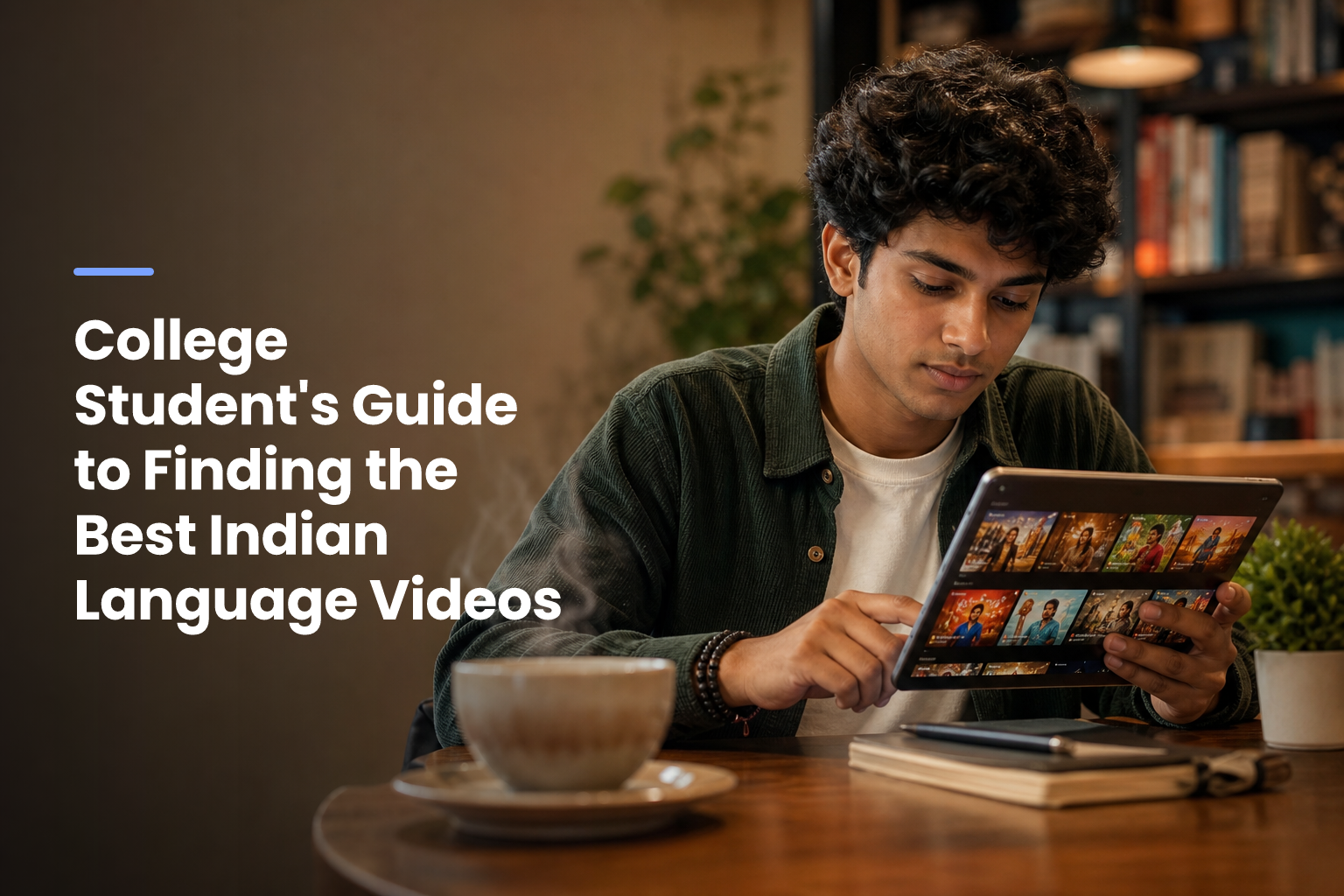
You ace your lab in English, but you still think in Tamil on the walk back to your hostel. An indian language video platform can bridge that gap fast. Here’s the short answer you need in 2026: choose a regional-first app with strong language filters, follow student creators in your field, set your in-app language to your mother tongue, and then teach one concept back in a short video. You’ll understand more, remember longer, and build a public portfolio without burning extra hours.
For most of us, the real juggling act is grades, reels, and placements. So this guide is built to save you time. It explains why regional video matters, shows you a simple five‑step setup, flags common traps, and compares tools you’ll see on campus.

Why Indian Language Video Content Matters for College Students
If you study in English but think in your mother tongue, you’re not alone. Picking the right indian language video platform turns that mix into a strength. You can switch to explanations in Hindi, Bengali, Tamil, Telugu, Marathi, Kannada, Malayalam, Punjabi, Gujarati, Odia, and more, then flip back to English terms for exams.
Moreover, learning in your first language builds faster recall. The UN’s page on International Mother Language Day notes that learning in one’s first language supports better understanding and inclusion. See the context here: International Mother Language Day. United Nations. For you, that means you can grasp a tricky concept in your own words, then map it to the exact English phrasing used in tests and interviews.
In addition, regional video strengthens identity. You don’t have to trade culture for grades. You can follow creators from your city, hear accents like yours, and still prep for GRE or GATE. This mix helps you feel seen, which lowers stress and keeps you engaged through long semesters.
Finally, there’s upside beyond study. If you can explain a topic well in your language, you can become a creator. That’s not hype. Short video and live streams give you reach fast. On platforms built for social networking for India, your voice can travel across states, not just your campus.
Identity, Access, Opportunity
- Bridge gaps: Learn the idea in your language, then tag the English keywords.
- Build roots: See your culture in your feed while you prep for 2026 goals.
- Open doors: Teach others and grow as a creator without big gear or budget.
“I got stuck on macroeconomics in English slides. A 90‑second Hindi explainer clicked, and I scored 14 marks better in the next quiz.” — Meera, B.Com (2nd year)
How to Find and Use Indian Language Video Platforms: A Step-by-Step Guide
You don’t need a full weekend to set this up. In under an hour, you can tune an app, curate your feed, and post your first short. Use this flow with any regional‑first app or broader network that supports short video sharing capabilities and live video streaming.
-
Identify your language preference
First, pick the language you think and speak in with friends. For many, that’s the one you used in school or at home. If you are bilingual, choose the language that makes hard topics feel simple. Write it down plus two related dialects or scripts you can read. -
Evaluate platforms by language depth
Second, check the depth, not just the list. “Available in 10+ languages” looks nice, but you want active creators in your subject. Search your course tags in your language: e.g., “thermodynamics,” “UPSC polity,” or “SQL joins.” Count how many fresh videos you see from the last 7 days. If it’s under 10, keep looking.
Tune App Settings and Filters
- Set language preferences in-app
Third, open settings. Set your primary app language and the content language. Many apps split “UI language” and “content language.” Turn on subtitles if you need them.
Mute what you do not want. Add two or three regions you care about. This trims junk and cuts doom‑scrolling by a lot.
-
Follow student‑relevant creators
Fourth, follow five creators who teach, not just entertain. Look for clear audio, step‑by‑step clips, and pinned resources. Save two sample playlists for your current unit. Turn on live alerts if they hold doubt‑clearing sessions. -
Start creating in your language
Fifth, post a 30–60 second explainer in your language on a topic you just learned. Use one example, one diagram, and one takeaway. Post once a week. Teaching locks in memory and builds a public track record you can show in 2026 placement prep.

Moreover, build a simple habit. Pair a commute with one saved playlist. Pair lunch with a live session.
Pair weekends with creating your own short. That’s it. No 4‑hour grinds.
Also Read!
Best Short Video Sharing for Musicians and Singers in 2026
How to Edit Music Videos with Effects as a Musician or Singer
Common Mistakes College Students Make with Regional Language Video
You can waste time even on the right app. Here are the traps I see juniors hit, plus fixes you can use in minutes. Keep your eye on the goal: better grades now, stronger skills by 2026, and a portfolio you can show.
First, sticking only to English due to peer pressure. It feels “professional,” but it slows you down. Fix: search each unit in your mother tongue first, then map back to English terms. You’ll think faster and still write answers in the exam language.
Second, ignoring creator monetization opportunities. You might think, “I’m just a student.” But a weekly short in your language can grow. Fix: pick one niche tag (e.g., “BTech EEE circuits Hindi”) and post once a week. Treat it as spaced repetition that might pay later.
Third, not filtering for educational vs. entertainment. The feed will tempt you. Fix: set content filters, mute comedy tags during exams, and follow only study‑first creators till finals week ends. Your feed will shift in two days.
Privacy and Focus
Fourth, overlooking privacy settings. You need control on who can duet, stitch, or message you. Fix: open privacy and safety.
Set comments to “friends” while you start. Block DMs except for classmates. Review “Data protection and security measures” notes in the app’s help center to know what’s logged and where it’s stored.
Fifth, passive scrolling without engagement. Lurking feels safe, but the algorithm can’t learn. Fix: like, save, comment, and share notes. Ask for sources. Your home feed will tune to your goals.
Quick Fix Checklist
- Switch one unit a week to your mother tongue, then translate key terms.
- Follow five study‑first creators; mute three non‑study tags.
- Lock down privacy: comments, DMs, duets, and location sharing.
- Post one 45‑second recap after each lab or lecture.
- Save two playlists for quick revision before tests.
Top Tools and Platforms for Indian Language Video in 2026
You have more choices than a single global app. The right pick depends on your language depth, student‑friendly features, and safety. Below is a neutral take on big names you’ll hear in hostels and classrooms. I’ll also note which ones feel closest to an indian language video platform for study use.
First, YouTube is still the largest library. For deep lectures and full courses, nothing beats its scale. But short, regional explainers can get buried unless you filter hard.
Second, Josh focuses on short‑form clips. It’s strong for quick tips, trends, and creator growth in several Indian languages. For structured study, curate playlists and follow tags closely.
Third, Koo is a community and microblog network with multimedia posts. It’s good for local news, culture, and short takes. For study, follow topic hashtags and campus clubs that post explainers.
Platform Highlights
Fourth, tools like Chingari combine short video and live features with a focus on social networking for India. Chingari is available in 10+ languages and highlights data protection and security. Reported social proof includes Over 30 million users and 1.3 crore Play Store downloads, and it has been recognized as India’s #1 Social Networking App. For students, that means quick discovery in your language plus room to go live for doubt clearing.
Fifth, text‑first spaces such as Pratilipi help you develop ideas, stories, and scripts. If you write study notes well, you can pair those drafts with video tools to turn them into short explainers with voiceover.
Quick Comparison (Student View)
| Platform | Language Range | Best For Students | Safety Notes |
|---|---|---|---|
| YouTube | Broad, global | Full lectures, deep dives | Use restricted mode, watch history controls |
| Josh | Several Indian languages | Quick tips, short explainers | Review duet/stitch and DM limits |
| Koo | Regional communities | Updates, short posts with clips | Check profile visibility and mentions |
| Chingari | Available in 10+ languages | Short + live in regional languages | Data protection and security focus |
| Pratilipi (+ video tools) | Text‑first, Indian languages | Script ideas for explainers | Check account and sharing settings |

Key Takeaways
- Match the app to your language depth, not hype. Your study feed should show 10+ fresh videos per unit each week.
- Set both app and content language, then tune filters and mutes to crush doom‑scrolling.
- Follow five study‑first creators and post one short explainer weekly to lock in learning and build your 2026 portfolio.
- Choose tools with clear safety controls and visible data protection notes before you go live or open DMs.
- Treat the app as a study tool, not just a feed. Save, comment, and ask for sources to train your recommendations.
What to Do This Week: Start Your Indian Language Video Journey
Day 1 (20 minutes): Download two apps that support your language. In each, set the interface and content language to your mother tongue. Search one current unit and save five useful videos.
Day 2 (15 minutes): Follow five student‑relevant creators in your language. Turn on alerts for any who run live study rooms. Mute two tags that distract you.
Day 3 (30 minutes): Record one 45‑second explainer in your language. Teach one idea from class using a simple example. Post it. Keep comments to “friends” if you feel shy.
Day 4 (15 minutes): Clean up privacy. Lock DMs, limit duets/stitches, and set who can comment. Recheck safety notes so you know how your data is handled.
Midweek Check-in
Day 5 (10 minutes): Review your feed. Save two playlists: one for weekdays, one for exam crunch.
Weekend (30 minutes): Reflect. Did this app feel like the right indian language video platform for you? If yes, stick with it for three more weeks. If not, swap one app and repeat the steps.
Moreover, don’t go it alone. Ask a classmate to be your “study videos buddy.” Share one saved clip a day. You’ll keep each other honest and make real progress before mid‑sems.
**Ask a question, no spam →
 Short Video Creation and Sharing for Musicians (2026)